
A Perth home packed with so many belongings that piles almost reached the ceiling has just sold for $1.285 million. That alone would be a talking point. What made the Kallaroo sale a genuine marketing case study was how the home was presented to the public.
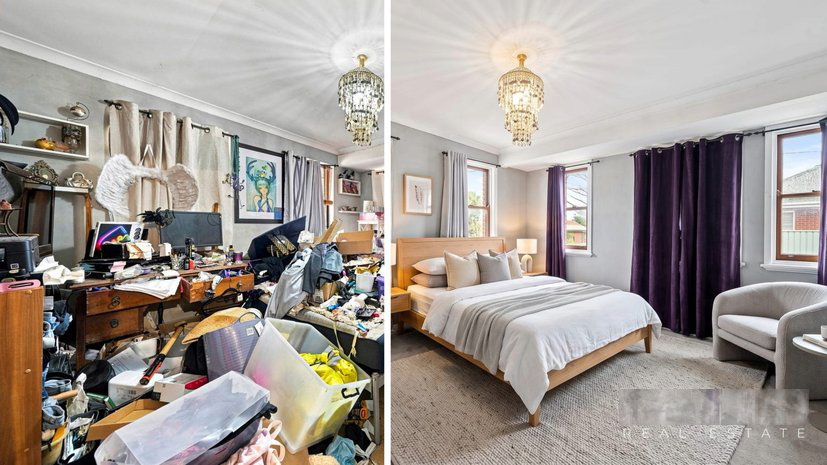
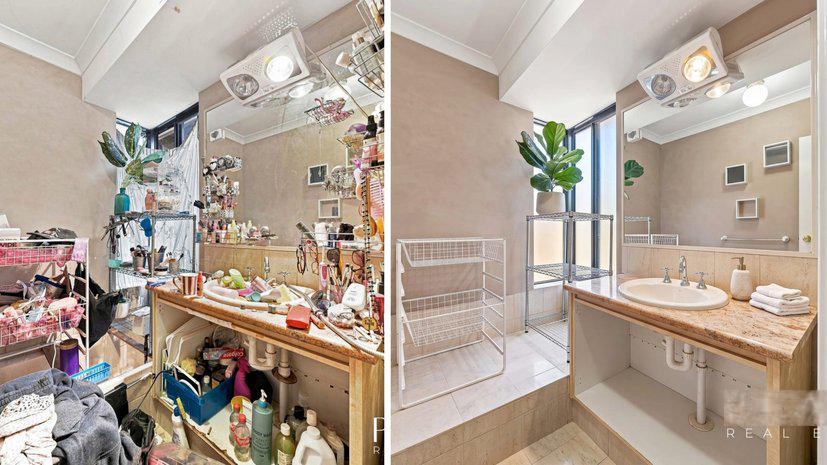
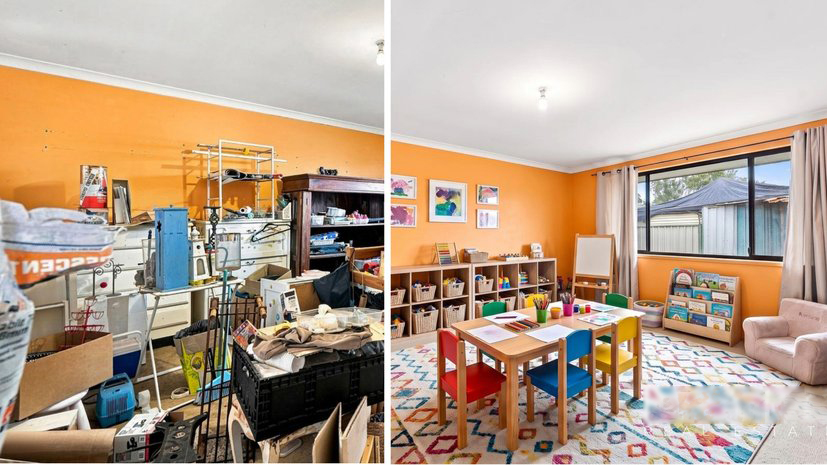
Instead of hiding the chaos, the selling agent put it front and centre. Each original photograph was published next to an AI-generated image showing what the same room could look like once cleared and styled.
The approach turned heads across the State. It also raised a bigger question for anyone buying or selling property in Perth: how far can AI go in real estate marketing before it starts to mislead?
In this guide, we break down what happened, what it means for buyers and sellers, and where AI sits within Australian advertising rules.
The Sale at a Glance
Here are the key facts reported about the Kallaroo property and its campaign.
| Detail | What was reported |
|---|---|
| Suburb | Kallaroo, Perth |
| Final sale price | $1.285 million |
| Property condition | Rooms crammed with belongings, some piles nearly reaching the ceiling |
| Marketing tactic | Original photos paired with digital renders of each room |
| Rooms shown side by side | Bedroom, bathroom, dining room and kitchen |
| Listing performance | Claimed to be WA’s most-viewed listing during its advertised week |
| Competition | Reportedly attracted more views than around 6,800 other WA properties |
| Time on market | Several weeks |
| Sale circumstances | Inherited home, owner facing financial difficulties |
How the Home Ended Up on the Market
The selling agent first became involved with the property about six months before the sale. The owner had inherited the home and was preparing to sell while dealing with financial difficulties.
By then, the owner had already cleared roughly half of the belongings. That is no small effort, but the volume that remained was still too much to handle alone, so professional help was needed.
The agent summed up the approach simply: ask people to do what they can, then help with the rest. It is a practical philosophy, and one that is common in estate and hardship sales where emotions and logistics collide.
The outdoor clean-up
The challenge was not limited to the inside. The exterior needed work too, so the agent’s team arranged for tradespeople to tackle the yard.
A gardener was brought in to remove debris, and a caravan had to be moved from the front yard. These jobs may sound minor, but street appeal still matters, even when the interior is the real talking point.
A different view of clutter
The agent also reflected on what the home represented. In his words, it shows “the other side of consumerism”. For many Perth families, clearing a loved one’s belongings is an emotional task as much as a practical one, and this property was a stark reminder of that.
Why AI Renders Became the Star of the Listing
Before the remaining clutter was cleared, the agent saw an opportunity. Rather than wait for a clean slate, he decided to turn the home’s unusual condition into a marketing advantage.
The campaign used a simple formula. Real photographs showed the home exactly as it was, and digital renders showed the same rooms as a blank canvas with furniture and styling added.
Side-by-side images were published for several rooms, including a bedroom, a bathroom and a dining room. The real kitchen was also compared with a rendered picture of how it could look.
Why it caught attention
The agent said the images were interesting and attention-grabbing, and that they were far from the usual AI look of white walls and wood-coloured furniture. That contrast is the point. Most digital staging looks polished and similar, so an honest “before” image next to an AI “after” image stands out.
He also noted that images like these are more likely to be shared with friends and discussed. In an era of endless scrolling, a listing that people send to each other has real value.
Honesty made the renders work
The most important feature of this campaign was transparency. Buyers were never asked to believe the renders were real. The original photos were published openly, and the renders were clearly labelled as renders.
That is the difference between using AI as a visualisation tool and using AI to disguise a property. We return to that distinction below.
The Results: WA’s Most-Viewed Listing
The tactic appears to have delivered. A video of the property attracted thousands of views, and the agent claims the home became the most-viewed listing in Western Australia during the week it was advertised.
That claim is a big one. It means the home reportedly drew more attention than roughly 6,800 other properties on the market across the State.
Attention, of course, is only useful if it turns into offers. In this case it did. Even with the home still full of belongings, interest from the public translated into competition between buyers.
| Marketing element | Likely impact |
|---|---|
| Honest “before” photos | Built trust and curiosity |
| AI-generated “after” renders | Helped buyers picture the potential |
| Side-by-side format | Made the listing easy to share |
| Video content | Reached thousands of viewers |
| Public interest | Created competition between buyers |
Why attention matters in a competitive market
In a market where buyers scroll through dozens of listings a day, standing out is half the battle. A standard gallery of tidy photos can blur into every other listing in the suburb.
The Kallaroo campaign worked because it gave people a reason to stop, look and talk about the home. That conversation, not the render itself, is what pulled thousands of viewers into the listing and onto the inspection list.
The agent said a home in this condition does have an impact on price, but public interest creates competition between buyers. After several weeks on the market, the property sold for $1.285 million.
What a Cluttered Home Means for Buyers
Not every buyer would feel comfortable making an offer on a home like this. The attention was positive, but the risks were real, and the agent was upfront about them.
Because belongings obscured sections of the property, buyers could not fully inspect every wall, floor or corner. Some parts of the home simply could not be seen, and buyers had to navigate around personal items during inspections.
The agent acknowledged that buyers in this position are taking on more risk than usual. That is a fair assessment, and it is why careful due diligence matters.
Due diligence when you cannot see everything
If you are considering a property with heavy clutter, you can take practical steps to protect yourself:
- Book a building and pest inspection, and ask the inspector to note any areas they could not access.
- Ask for the remaining belongings to be cleared before settlement, and confirm this in writing.
- Request a second inspection once the home is emptier, if the contract allows.
- Allow a contingency in your budget for repairs, cleaning and surprises.
- Speak to your conveyancer about what the contract says on vacant possession.
In this sale, the agent’s team is working to clear the remaining belongings before the keys are handed over. The agent said the new owners would be happy with the result, and so would the neighbours.
Where the Price Sits in the Kallaroo Market
The agent described the $1.285 million result as being on the higher side for Kallaroo, given the condition of the home. It is worth putting that figure in context against REIWA’s suburb data.
| Kallaroo snapshot | REIWA figure |
|---|---|
| Median house price | $1,477,500 |
| Recent annual growth | 28.5% |
| Postcode | 6025 |
| Population | 5,177 |
| Local government area | City of Joondalup |
| Nearby amenities | Whitford City shopping centre, Whitfords train station |
Measured against the suburb’s median house price, $1.285 million sits below the middle of the market. That is not surprising for a home that needed extensive clearing and could not be fully inspected.
It does show how strong demand is across the Kallaroo area. A property in this condition still attracted serious buyers, and that tells us plenty about how competitive Perth’s northern coastal suburbs have become.
Is AI in Property Marketing Legal in Australia?
Digital tools are now a normal part of real estate marketing. Virtual staging that once took days can now be done in minutes, and some services charge as little as 23 cents per image.
One analysis of 217,000 listing images across 23 portals found that about one in fifteen images globally showed detectable AI enhancement. Surveys overseas suggest close to 70 per cent of agents have experimented with AI staging or imagery tools.
Using these tools is generally legal. The problem arises when it misleads. Under Australian Consumer Law, administered by the ACCC, agents must not engage in false or misleading conduct, and that includes property advertising.
In practice, this means AI images should never add features that do not exist or hide faults a buyer would want to know about. A fake garden, a renovated kitchen that is not really there or an invented view could all create serious trouble.
What other regions are doing
Regulators overseas are already responding. California introduced laws, effective 1 January 2026, requiring real estate professionals to disclose digitally altered or AI-generated images in property advertising.
In New South Wales, a reform targeting altered rental images that conceal faults has been proposed. Western Australian buyers and sellers should expect the conversation around disclosure to keep growing.
Transparent AI Use vs Risky AI Use
The Kallaroo campaign is a useful benchmark because it sits clearly on the right side of the line. Here is how responsible AI marketing compares with risky practice.
| Approach | Transparent AI use | Risky AI use |
|---|---|---|
| Original photos | Published alongside renders | Hidden or replaced |
| Labelling | Clearly marked as AI-generated | No disclosure |
| Purpose | Shows potential and layout | Conceals defects or condition |
| Features shown | Only what could realistically be created | Adds views, rooms or finishes that do not exist |
| Buyer reaction | Trust and curiosity | Disappointment at inspection |
| Legal exposure | Low | High, under misleading conduct rules |
The principle is simple. A buyer should be able to tell quickly what is real, what is staged and what is AI.
Lessons for Perth Sellers
You do not need a home full of clutter to learn from this sale. The following lessons apply to almost any Perth listing.
- Be honest about condition. Buyers appreciate a clear picture, and surprises at inspection cost more than honesty up front.
- Use AI to show potential, not to disguise the property. Label every render, and keep originals visible.
- Make your listing shareable. Side-by-side visuals and short videos travel further than a standard gallery.
- Get help when you need it. Clearing a home, whether inherited or not, is easier with tradespeople, cleaners and an agent who understands the process. Use professional home staging services.
- Create competition. The more attention a home earns, the more likely buyers are to compete.
Distressed and estate sales
This sale also highlights the realities of distressed and deceased estate sales. Many of these homes are in difficult condition, and some involve court orders or complex family circumstances.
The agent’s team specialises in these types of sales. He described them as more hands-on, and said his team likes to help in ways that enrich the community. Experience and empathy matter as much as marketing in these situations.
Lessons for Perth Buyers
Buyers can learn something from this story too. Attention-grabbing marketing is good, but it does not replace your own checks.
Treat rendered images as inspiration only. They show what a space could look like, not what it is. Always rely on the original photos, a physical inspection and professional reports.
Pay attention to disclosure. If images look unusually polished, ask whether they have been edited and whether you can see the originals.
Finally, remember that unusual condition can create opportunity. Homes that look challenging can attract fewer buyers, though in this case public interest changed that dynamic.
A final tip for buyers is to watch for urgency. When a listing is attracting this much attention, competition can push people to move faster than they normally would. Set your maximum price before you inspect, and stick to it, regardless of how exciting the campaign feels.
Frequently Asked Questions About AI in Real Estate
Can agents use AI-generated images in property listings?
Generally yes, provided the images are not misleading. Agents must comply with Australian Consumer Law, which prohibits false or misleading conduct. Clear labelling and access to original photos are best practice.
Does a cluttered home sell for less?
Often, yes. Clutter can hide the condition of walls and floors, which increases buyer risk and may reduce the final price. In the Kallaroo example, strong public attention helped create competition between buyers.
Did the renders make the Kallaroo home sell?
The agent credits the response to the advertising for a very good result. Combined with the property’s attention as WA’s most-viewed listing that week, the marketing clearly played a major role.
Should buyers trust digital renders?
Treat them as a guide to potential only. Check the original photos, inspect in person and arrange professional reports before you make an offer.
What are the cons of using AI to improve property images?
AI can make a listing look better, but the downsides are real, and most of them come back to trust. The main risks are:
- Misleading buyers. Images that add features, change finishes or hide defects can breach the Australian Consumer Law, which prohibits misleading or deceptive conduct in property advertising.
- Disappointment at inspection. When a home looks very different in person, buyers lose interest quickly, and the seller loses the momentum the listing built.
- Disputes at settlement. If a buyer feels the property was misrepresented, it can lead to complaints, renegotiation requests or even legal action.
Thinking of Selling ?
At Holdsworth Real Estate, we use AI to enhance our marketing, never to mislead. Every photo and every description stays true to your property, so buyers and sellers alike get no surprises at the inspection or at settlement.
Ready to find out what your home is worth? Contact our team today for a current appraisal and a marketing plan built on honest, eye-catching presentation. Your home is our passion.